

Show Me The Awesome: Librarians as Catalyst in a STEM/History Collaborative Project
 |
| Public Domain Image via Pixabay |
On the surface, I realize that doesn't make sense, but if you understand the chemistry of cooking, you'll figure out where I'm going with this. I am a cook, who not only enjoys the physical act of making great food, but who also insists on understanding why and how dishes work. In baking, eggs play the key role of binder, allowing other ingredients to not only meld together, but also to physically hold them in place while the outside forces of friction (think your mixer paddle) or heat work a reaction.
I think school librarians are like eggs.
We have a cross-departmental reach allowing us for a broad understanding of the curriculum, an understanding which gives us that eagle's eye view of where teacher content and projects might overlap. Backing innovative teacher ideas, particularly when they are in their infancy is a moral obligation, one I take seriously in order to encourage risk-taking and to establish a supportive professional climate. Librarians bind together teachers, departments, and students, making collaboration bloom into something completely new which hopefully enhances student learning.
Eggs Like to Sit in the Carton Together
 |
| Artwork by John LeMasney, lemasney.com |
But chances are good that we don't actually discuss every cool thing we do and I've found that a few of my programs or projects that I think are run of the mill, fascinate other librarians who want all the details. Similarly, I've heard about an amazing hacker program or fundraiser that a friend has done forever in her library, never having experienced the brainwave about how cool it is and that she should share it with other professionals.
So when a good friend of mine sent me the blog post link with a "Have you seen this? You should do it!" note, I put the brakes on my "What on earth do I do that's so special?" reaction and really looked at what was on my plate. I think the best way to determine if a project is something others will want to read about is to figure out what you are doing that genuinely excites you. My happy energy was targeted at a particular project combining our new STEM program and a talented World Civilizations teacher looking for a meaningful end of year research project for her students.
I thought you might like to hear all the details. :-)
STEM Isn't Just an Acronym, It's a Philosophy
I don't know how many schools are jumping on the STEM (Science, Technology, Engineering, Mathematics) bandwagon, but my school was lucky enough to have a donor who felt that our science and mathematics program could use funding to explore disciplinary opportunities in the field of STEM education. The Louis Maslow School of STEM was born from this donation, and in its initial stage it has brought a series of guest lecturers to our school and begun conversations among the faculty about how to bring this interdisciplinary approach to teaching into the classroom.
We have a talented director of the program who has done a terrific job of spreading the word about what STEM actually is. Begun in higher education, the movement for stronger, cross-disciplinary education came about as a result of pressure from science/engineering corporations lamenting that they had to hire so many employees from abroad when they wanted domestic workers (Raju & Clayson, 2010, p. 25). Due to the actual practice of professions related to these subject areas, the ideal STEM program moves away from a teacher-centered classroom and transforms into a problem-solving, inquiry-based space requiring students to engage in situations in order to find solutions (Fiorello, 2010).
A large part of our school's thinking about STEM has taken place outside of formal meetings and instead proliferated among the lunch tables where teachers in all subject areas debate the pros and cons of interdisciplinary teaching. It's not surprising, in an environment where we are empowered to try new projects and experiment in our courses, that an intrepid World Civilizations teacher considered how to further her goals in the classroom while also supporting the burgeoning STEM program. Lucky for me, both these wonderful educators brought me on board immediately and, together, we brainstormed how STEM would look in a history classroom.
The Third Industrial Revolution Inspiration
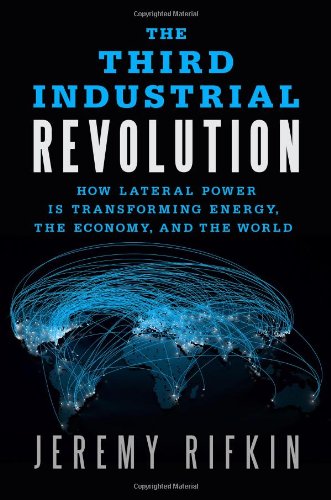
Inspired by an article in The Economist on the third industrial revolution, my wonderful history teacher was struck by the theme of manufacturing, particularly utilizing 3D printer technology, as being a leveler which will promote another major revolution. Because she uses the themes of revolution (agricultural, scientific, First Industrial, Second Industrial) as a vehicle for understanding world history throughout her course, we began the conversation of what would reinforce the students' research skills while also bringing in a critical thinking component regarding technology in the everyday lives of students. She was also looking for a spring term research project (we had done the 5 to 7 page research paper in the winter to transmit key information literacy skills) that would engage students and bring home the idea that history isn't something which ends with the last page of a textbook.
Bringing in our STEM director, the three of us brainstormed our ideas on a Google Doc, honing this concept from hazy vision into concrete project. My history teacher was kind enough to not want to saddle kids, the week before finals week, with an actual paper, so we decided that a group presentation fit the bill, one that hopefully utilized the Prezi and PowerPoint skills they had learned in other courses. We wanted to bring not only a STEM topic to the table, but also the STEM principles of working collaboratively, working creatively, researching effectively, and creating strong hypotheses into these student projects.
Here were our goals for students by area:
World Civilizations Goals: To understand recent digital technologies in both a historical perspective and also as another potential revolution which is changing society; to demonstrate the ability to critically think about a specific technology and develop a contextual argument discussing the pros and cons it offers humankind
STEM Goals: To understand that science and technology is not only all around us, but integrated so firmly into everyday life as to make its true impact often invisible; to further promote a concrete understanding of the science behind these technologies and to forecast where these technologies are likely to take society
Library Goals: To reinforce the information literacy skills taught World Civilization students throughout the year, particularly the ability to locate quality resources using the library's subscription databases and Noodletools as a vehicle for proper Chicago-style citations; to promote the use of collaborative technologies like Google Docs for effective group work; to demonstrate proficiency in using presentation technologies effectively
Drones, Google, Handheld Devices and GPS

The above four topics were the student groups' choices for their projects and we (the faculty) had reservations about some of them, but with it being the first year of the project we were willing to experiment. My concern was that, with the exception of GPS, these topics were broader than an actual technology (drones should maybe be artificial intelligence, Google would be search engine algorithms, and handheld devices should be cellular or wireless technology or the microchip) so the students were perhaps unintentionally complicating their topic.
Students spent a couple of days in their classroom brainstorming ideas, working in groups to hammer out roles, interspersed with three days in the library finding materials which would support the project's parameters. We watched each group carefully, circulating and reminding them to use the databases and cite their sources as well as occasionally helping with technology questions like using Google Docs or Prezi. Because I have a history of science background, two of the groups (Google and GPS) interviewed me for my perspective on these two technologies and I gave them quite an earful which they used to varying degrees. The drones group interviewed our school president, the former head of the Engineering program at West Point, and someone amply qualified to explain that particular technology and its impact.
The presentations were variable in quality. For the most part they all looked very nice (although they had too many bullet points!! *gnashes teeth*) and it was clear which students had bothered to seriously read versus the internet skimmers. My wonderful history teacher and I were struck by the fact that each group essentially had the same thesis although none of them seemed to realize it - namely, that technology is changing so quickly that the law, particularly surrounding privacy and personal liberties, can simply not keep up. A little more chilling was how easily students seemed nonplussed by the idea of their privacy being sold so cheaply, especially considering how they flip out if their parents insist on being a Facebook friend, but maybe that's me editorializing.
Students spent a couple of days in their classroom brainstorming ideas, working in groups to hammer out roles, interspersed with three days in the library finding materials which would support the project's parameters. We watched each group carefully, circulating and reminding them to use the databases and cite their sources as well as occasionally helping with technology questions like using Google Docs or Prezi. Because I have a history of science background, two of the groups (Google and GPS) interviewed me for my perspective on these two technologies and I gave them quite an earful which they used to varying degrees. The drones group interviewed our school president, the former head of the Engineering program at West Point, and someone amply qualified to explain that particular technology and its impact.
The presentations were variable in quality. For the most part they all looked very nice (although they had too many bullet points!! *gnashes teeth*) and it was clear which students had bothered to seriously read versus the internet skimmers. My wonderful history teacher and I were struck by the fact that each group essentially had the same thesis although none of them seemed to realize it - namely, that technology is changing so quickly that the law, particularly surrounding privacy and personal liberties, can simply not keep up. A little more chilling was how easily students seemed nonplussed by the idea of their privacy being sold so cheaply, especially considering how they flip out if their parents insist on being a Facebook friend, but maybe that's me editorializing.
What We Are Going to Change for Next Year
We learned a lot for next time. I'm wondering if we shouldn't bump the project to a little earlier in the spring term since 9th grade brains seem to flash "FULL" in those last couple weeks of school. There were some very specific points that we realize we can work to emphasize next time that will make the kids focus on the key points better, namely the following:
- Thesis needed from each group - as a school, we focus in that first year of helping students move from a "report" mentality to one of constructing an argument; I think we sort of assumed they would do this, but we need to clearly state it as an expectation so they don't dance around their own critical thinking
- Tie the technology more strongly to the "revolution" theme - Each group should define “revolution” at beginning of presentation and explain how their technology fits this idea
- Use the freaking databases!!! - Three days of in library research, we stated it in the project description, said umpteen times in class only to have one of the groups explicitly state their use of quality sources. I realized that we can use our SIRS Researcher debate database to elucidate on pros/cons requirement of the project.
- State the information's authority - While the majority of students have had our required public speaking class and/or (if they've attended our Lower School) lived through our 7th and 8th grade speech projects, they still didn't seem to understand that we weren't to be snowed when it came to presenting information. Students should refer to authoritative sources within their presentation “According to an article in Wired magazine...” and we are going to insist they do this next year.
- Stronger historical context - Considering it was a history project, I was dismayed by how few students made an effort to explain the before and after piece of their technologies. Posing some key questions - What was the world like before the technology in question appeared and what is the world like with it? - will hopefully help with that.
- Better understanding of group work - It became readily apparent which groups had actually worked together and which ones hadn't in creating their presentation. Repetition of information, actually looking surprised at other people's slides, and kvetching about group members in my hearing were all keys to realizing that some groups didn't have this piece down. Since next year we are implementing a 9th grade STEM science course that has as one of its many goals teaching effective group work, we are hoping that we can reiterate these themes across other classes and help students understanding our expectations.
A Philosophical Reflection: Pigeons and Why We Need STEM
 |
| Pigeonholes. Literally. |
If there is one student commonality I've noticed as a librarian regularly teaching information literacy skills, it's that students pigeonhole the skills and content they learn from one class to another, as if each 45 or 90 minute block exists without reference to another. When we introduce the history term papers and teach effective outlining, the history teachers and librarians co-teach the "rule of three" concept (three sections to support your thesis, three body paragraphs with evidence for each section, three pieces of evidence for each body paragraph, etc.), an idea we think should be astonishingly easy for students to grasp since they have pretty much mastered the 5 paragraph essay at this point which has three body paragraphs.
But they don't. We get cocked heads and "whaaa?" facial expressions. You compare hypotheses and theses and a similar reaction occurs. Why is this? My sinking suspicion is that we simply don't ask students to make cross-connections, unconsciously rewarding them for mastering individual subject material in largely traditional assessments (tests and papers). Since each student's goal is to get the best grade possible so they can have a transcript that will get them into the best college possible, it's not exactly shocking they aren't putting in the effort to make a ton of cross-curricular connections for which no teacher will reward them from a grade standpoint.
Hence, our needing a STEM approach in the worst way. Interdisciplinary teaching that has a project, problem-solving focus and which attempts to show relationships between subjects (and I truly believe that each individual teacher in their classroom is successfully showing relationship between material every day) will do more for helping students engage their world and develop a strong intellect than almost anything else we can offer. A few of the US History teachers (traditionally a largely 10th grade class) are discussing partnering with Sophomore English to see if they could align elements of their individual curricula and develop common themes. I've got my fingers crossed this could result in some interdisciplinary paper topics which would involve these talented teachers working together more frequently. The fewer pigeons in the individual cubbies, the better, in my opinion.
And pigeons lay eggs, right? See? It all comes full circle. I've got my fingers crossed that as our STEM program takes further root in our school culture, we are going to see more collaboration between teachers, departments and particularly the library. I for one love the opportunity to help bind ideas and skills together with the result of stronger, quality teaching and increased student learning.
What's your awesome?
References
Raju, P. K., & Clayson, A. (2010, October). The future of STEM education: An analysis of two national reports. Journal of STEM Education, 11(5 & 6), 25-28. Retrieved from http://ojs.jstem.org/index.php?journal=JSTEM&page=article&op=view&path[]=1508


