Showing posts with label literature. Show all posts

New Adult: It's Not Just the Sexy Times

Public domain image via Pixabay
While I enjoyed all my sessions at the ALA Annual Conference (woo-hoo, Chicago!), the best program I attended was facilitated by the fabulous threesome of Kelly Jensen, Sophie Brookover, and Liz Burns. These outstanding librarians took time out of their busy Monday morning to present "New Adult: What Is It & Is It Really Happening?"

YA with Sexy Times


This fun and information filled session gave me enough to ponder over the course of a few posts, but one of the stand out points made by Liz Burns in particular was the idea that right now, New Adult is currently synonymous with Contemporary Romance starring the 18 to 24 age group. She made a point of saying that this growing genre was more than just "YA romance with sexy times added" but instead included elements of living away from authority figures, beginning to conceptualize the independence that comes with college or living independently, while also exploring sexuality and relationships in a more frank and explicit way. It's all about forming an identity as an adult, and you really can't do that successfully until you start living away from home.

No judgement was offered by the panelists regarding this trend, but it was suggested that the genre might gain more legitimacy when readers (and librarians and publishers) began associating it with other genres, broadening the scope of the label. I think this is actually the usual stigma against romance and when you add in more explicit sexual content, someone is going to get their panties in a bind about it, but I understood what she was saying. As much as I hate it and I feel it's very anti-woman (if men were the predominant readers of romance it would be a mark of an intellectual mind to have your shelves filled with it), the public has trouble thinking young adults (or new adults) falling in love has any kind of value. Luckily my days are largely spent with the intended audience, so I can enjoy like-minded enthusiasts who do think this is valuable topic!

Liz actually went on to say that the much bigger issue surrounding the perceived legitimacy of New Adult was the fact so much of it is currently self-published, with the accompanying poor editing this entails, but she imagined that as publishers finally opened their hearts and wallets to the authors with books to sell, the quality of the work should rise accordingly.

But for now, I wanted to make the point that there are certainly books and series which fall outside of contemporary romance (and do not have two eighteen year old laying down with each other or embracing with plenty of skin showing). Here were a few ideas that came to mind.


New Adult Beyond Contemporary Romance

So what books might fit the definition of New Adult but fall outside the realm of Contemporary Romance? Here are a few that were discussed at the ALA session or that occurred to me would feel right at home in this category.

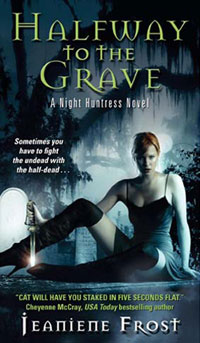
Halfway to the Grave by Jeaniene Frost and it's immediate sequel, One Foot in the Grave, is fabulous urban fantasy paranormal romance, with the nineteen year old Cat Crawfield, the half-vampire offspring of a woman raped by a newly turned vampire, bent on teaching herself how to kill the undead. She does a pretty good job of it, too, but finds her world derailed when the incredibly hot and deadly 300 year old master vampire Bones, catches wind of what she's doing. While I would call the entire series urban fantasy, the first two books really fit the New Adult category. The romance with Bones is on equal footing as Cat's acceptance of herself and the fight between good/evil and the first book does NOT have a happy ending (I recommend getting both of them if you're beginning to read this series to prevent a bad case of agita). The sensuality level is very high, but it's extremely appropriate as Bones was a professional male prostitute before he was turned (and the man has skills, let me tell you). Their sexual intimacy is a big metaphor for Cat breaking down the walls she's built to protect herself over the years and vital to the storyline. So "neh" anti-sexy times contingent!

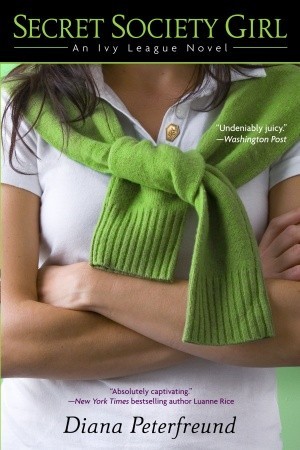
Diana Peterfreund's Secret Society Girl series has several of the New Adult markers, and clearly Dell Publishing is smart enough to know this as they have rewritten the introduction on Goodreads and elsewhere to this series to include a reference to "fans of Beautiful Disasters." The Ivy League college setting, the protagonist's struggle to define herself and often fight for her education amid the demands of the secret society to which she belongs and finally the drama surrounding various mysteries and her romantic entanglements put this firmly in the New Adult genre without being contemporary romance. Peterfreund even comments on her blog about how she was contacted by numerous would-be new adult writers eager to hear her tips since this series was so clearly New Adult, yet she makes a point of how she has purposely focused on writing about younger teens or about late twenty something, specifically because the New Adult market wasn't robust enough to support sales of literature for this age group.

Historical fiction is where New Adult hits a roadblock, largely because the cultural definition of adult has varied throughout time. Yet if we dissect the markers listed above for the genre, there will undoubtedly be historical fiction or other genres with historical elements that fit this category. One series that immediately came to my mind was The Agency series by Y. S. Lee. In the first novel, A Spy in the House, Mary Quinn is seventeen and has graduated from her training at Miss Scrimshaw's (where she has been groomed to be a spy). Posing as a companion to a spoiled young woman gives her the entrance she needs to the suspicious parties in question, but a keen-eyed and handsome engineer becomes first an obstacle and then an unlikely ally. While the burgeoning romance is a strong plot element, far more compelling in this series is Mary's posing as "Irish" when in actuality she is half-Chinese. Originally condemned to death as a child by the arcane Victorian justice system, she wrestles with her identity and the confines of society which would eagerly dictate her future. I love this series (so much so that purchased the third book in England since it came out months ahead of the US date and had it shipped to me) and it's readily apparent how the quest for identity makes this series - which I believe takes Mary up to about age 20 or so - New Adult.

Finally, it was mentioned in the session that all too often New Adult has become synonymous with "white, college bound" protagonists (even the books with the hero being the underground MMA fighter who also has a band - but that's for another post!). Yet, a close examination of "street literature" or what is also called "urban fiction" puts it firmly in the New Adult category. These young men and women are usually finished with high school and are in the process of negotiating their future in a gritty urban setting. African American and Latino characters are the norm and crime and poverty motivating factors for behavior and choices. Authors like Nikki Turner, Ashley Antoinette Snell, and Deja King are incredibly popular. Often, the protagonists are determined to make something of themselves or help their families, often while defining what real love looks like.

I'd be interested to hear what other people feel fall into New Adult but are not contemporary romance. What is out there that would appeal to this transitioning age group?

Yet Another New Year's Resolutions Post...


I think my problem with this blog is that I've been relying on it as largely a book review blog (not that there's anything wrong with that) but I do go through stretches that I 1) don't have time to read many books because I'm wading through my stacks of professional journals, 2) am busy with programming or projects in the library, or 3) really don't like any of the books I'm forcing myself to read. 

Since I hold pretty strong opinions, I think it would be mean to write negative reviews (and when I'm cranky about something, my fingers become little vipers dancing across the keys), so I usually hold out for books I actually like.  This can delay posting, particularly if I want to pack my entry with tons of links to author blogs and other info.

 So my New Year's Resolution is that I'm going to enforce my 80 page rule and put aside any book that hasn't grabbed me by then and move on to the next (and maybe I'll do a brief post about the books that aren't grabbing me and explain politely why).  And I am also going to participate in the YA Reads Book Review 2011 challenge, Level 3, which means I'm going to read 12 books in 2011 (I'll read a lot more, but I'll blog about at least 12, beyond my favorite authors).

I'm also going to take more pictures of my programming and write regular posts about what I'm doing with links to the Google Docs I'm using and informative how-to explanations that might be helpful to a beginning librarian.  I'll also write the occasional (brief) response to buzzy topics on the web surrounding libraries, since I so dutifully put those in my Evernote account under my "Blog This!" list.  Lastly, I plan on having a regular post about some of the professional work I do with YALSA or other organizations to hopefully encourage and inform other librarians interested in making a mark with their local or national professional organizations.

I think this sounds pretty reasonable!  Let me know if you have another topic you'd like to read about. :-)


Promoting Teen Reading with Web 2.0 Tools - Part II: Author Madness

Yes, I'm still thinking about the terrific YALSA Preconference I attended a month ago.  (I take time to percolate on things - whatever.)  This half day event (which should have been an entire day) started off by having some wonderful academics speak about recent research in the area of teens and reading, but I've already blogged about that part.  After hearing about the research, it was great to have the next chunk of the preconference be about online reading and the art of interacting with readers.  Did I mention who the experts were?  Just amazing AUTHORS who happen to excel at this art of connection.  Cha-ching.

Violet on the RunwayDone in panel form (the world of YA literature seems to be small enough that all authors seem to get along really well or at least have some kind of special handshake that makes them instantly like each other), our experts consisted of Melissa Walker, Malinda Lo, and Kami Garcia and Margaret Stohl.  Melissa Walker, author of the Violet series, came from a unique background of fashion magazine editorship and said that she felt so many magazine really did not address the aspect of teen reading to the extent she would have liked.  Rather than sit around kvetching, she not only became an author herself, but became a blog editor for Readergirlz, an incredibly popular blog covering YA literature and known for good author interviews and online chats.  Readergirlz chooses books with strong female characters and has the unique angle of its featured authors writing 10 questions for readers to consider when thinking about their books (bring, bring - dialing librarians...instant book discussion fodder here).  Readers are encouraged to create playlists that they feel fit the book's tone (also a great book discussion club idea) and just engage in general with the authors who they get to chat live.  On her personal blog, Melissa said she took the reader engagement seriously by asking her readers for ideas.  In a recent book, her editor suggested that she take the known bands referenced in the novel and substitute fake band names to keep the book from getting dated.  Melissa turned around and asked her readership for band name suggestions and the material she got back was so terrific she used several.  In the area of continued empowerment, Melissa is also a founder of the Before You Were Hot blog, in which people submit shockingly embarrassing photos of their young selves.  She said that no follow up "hot photos" are required of submitters because the blog authors allow people to define their own hotness. 

AshMalinda Lo was the next author in the panel and anyone who has not yet read her book, Ash, a retelling of the Cinderella story, needs to get off their duff and hop to it.  Malinda started out as an entertainment reporter and realized the importance of authors having coherent websites and contact information since she experienced several with neither quality.  She spoke about how she actually spent so much time working on her website that it became overwhelming and she realized (with the help of her editor) that she needed to back off and focus on her writing.  She simplified and streamlined her website after this revelation and said that, while her blog entries are less frequent, they are far more relevant and meaningful.  She maintains a strong professional boundary between herself and her audience and because of the GLBTQ content of Ash, she said that she often gets some very heartfelt and revelatory emails from young men and women in the midst of dealing with issues surrounding their sexuality.  Working in a school, I am used to listening to kids reveal inner thoughts and feelings (and knowing when to call in advisors and school counselors so we could work as a team to make sure these students were healthy and supported) but Malinda's concerns seemed to inspire a lot of head nodding from the public librarians who are obviously in a tough position when it comes to privacy and helping teens yet maintaining an awareness of boundaries.

Beautiful CreaturesLast up was the team of Margaret Stohl (who asked us to call her Margie, that's a hard "g" thank you) and Kami Garcia.  They are the team that made buzz history with the response to their novel, Beautiful Creatures, a book that was written on a dare from Margaret's teenage daughter.  Margie and Kami were joking about how they should write a book together (Kami was a longtime friend and an English teacher) and Margie's daughter taunted them with the idea that they would never finish the project if they tried to write a novel.  Twelve weeks later, she was eating her words!  Kami and Margie said that for them it was like writing a "bedtime story" to a very specific audience.  The daughter and her friends became a focus group for the author duo and they discovered that these young women (and occasionally a young man) wanted a more powerful female protagonist than what they were reading, specifically one that didn't have to be rescued, and they enjoyed a strong sense of place, particularly a highly regional one with magical overtones.  Enter Beautiful Creatures, which has been termed a Southern Gothic paranormal romance, and not just by me in my blog entry about it.

Kami and Margie, while using focus groups (Margie came from a video gaming industry background and said that soliciting feedback in this way seemed very natural for her), never lost sight of the fact that they felt their readership was a global one, a wise consideration since the book has been translated into a few dozen languages and been a best seller across the globe.  They have a Facebook page for the Caster Chronicles series (and their individual Facebook pages are open ones to the public and therefore maintained by them in a professional manner), Kami is on Twitter and in fact says she is happy to respond to questions via that format.  They each have their own blogs and promote some pretty great fan pages (check out Caster Girls & Boys), have contests, support their publisher websites and have a YouTube Channel.  I'm exhausted just listening to them.  Even the other authors began cracking jokes about how they needed to step up!

At this point, the moderators opened up the panel to questions from the audience and you could hear the cogs turning in librarian minds about how we can apply all this information to help our teens recreationally read in the most energizing and fun way possible.  One librarian was rather tongue in cheek, asking the authors if they felt that their personal website for their blog or book was better than the official publisher one, but the authors didn't take the bait (one or two waived to their editor who was in the audience with a cheeky smile) and they said that it was always a good addition.  Margie Stohl mentioned that the "cult of personality" is big among teens so the more personal the connection to the author, the more likely teens are to read and be engaged.  There was quite a happy and enthusiastic discussion about Skype among the authors, who said that they wished they could get out to libraries more to connect with teens and that Skype was a method they were comfortable using.  They mentioned the great "skype an author" website set up for this purpose of connecting authors and readers, and they all said they would never charge a library for skyping them (*heart you, authors!!!*).  Interestingly enough, they also said that in their experience, students are MORE engaged and revelatory in Skype sessions since the medium kept them from being tongue-tied around authors.

The session concluded with the authors telling us about their upcoming books.  Of course, Kami Garcia and Margaret Stohl have their sequel to Beautiful Creatures, Beautiful Darkness, coming out in October. (Side note: as with all YALSA things the giveaways are awesome and we received a tote bag with a few ARCs, including Beautiful Darkness!) Kami and Margie said that the sequel is darker than the first book and that they believe that fans will be very satisfied.  Melissa Walker said she is working on her next book, Small Town Sinners, due out in 2011 about Hell Houses.  Does everyone know what those are?  In case you don't, Hell Houses are kind of like the haunted houses you can visit around Halloween, but instead of Frankenstein and chainsaw-wielding maniacs, evangelical Christians act out the horror and consequences of major sins in the hope that onlookers will become born again Christians or be confirmed of their already existing beliefs if they already are one.  Melissa said she was interested in a female protagonist who, through her participation in a Hell House and through the lives of her friends, begins to question her beliefs and wonder if life isn't more complex than she was brought up to believe.  Malinda Lo said that she is working on a companion novel to Ash called The Huntress.  The Huntress is set in the same world as Ash but is more of an origins story several hundred years prior to the Ash's world.  Since Ash's world deals with some rather major conflicts around religion, I know I'm riveted in my seat if I get to find out more about how those tensions began.  It's due out in April 2011.  I can't wait for all of them!

A Series That Thrills Me...The Wicked Lovely Books by Melissa Marr

I'm really enjoying the recent books published dealing with the fairy realm.  It's just a wild guess, but I think the popular response to all the vampire books has given authors and publishers permission to take a walk on the wild side and go a little darker when it comes to fairies.  This has placed stories out of the Tinkerbell genre and right where they belong from a literature and myth perspective - in very dangerous territory.

Radiant Shadows (Wicked Lovely)
I don't know why I haven't blogged before on fairy books that I've loved, but suffice it to say that I'm fixing this now.   Melissa Marr leads the pack (in my heart) in this respect of all things fairy - her books are dark and sexy with great characters and a subculture that knocks your socks off.  With the latest installment of the Wicked Lovely series here in the form of the book Radiant Shadows, readers have gotten an even more compelling novel that will leave them craving more.  HarperCollins has been a great publisher for her since I love the way they don't hesitate to plug their video booktrailers.  Hopefully they realize they hit the jackpot with Melissa since she is such a social network maven with her great blog and Twitter posts that brighten everyone's day.  Check out the Radiant Shadows booktrailer to get a sense of what I mean. 


Wicked Lovely (Wicked Lovely (Quality))So what is the Wicked Lovely series, exactly?  (We all know booktrailers leave a great deal unsaid.)  Wicked Lovely was the first book in the series (and I'd recommend reading them in order just to catch all the character development) which introduced us to an unnamed gritty city in which Aislinn, a young teenage girl, lives with her grandmother and desperately tries to have a normal existence.  Rather a challenge, considering that she can see fairies.  I gather this is quite a talent considering that no human is supposed to see a fairy unless that individual fairy wants to be seen.  She catches the eye of Keenan, the Summer King, who has been trying to find a queen for his court for centuries, a development that does not thrill Seth, Aislinn's edgy boyfriend.  Keenan is not without emotional baggage either, and his former girlfriend, Donia, not only still loves him but might be the heir to the Winter Court, which would mean she would be set in polar opposition to him in the fairy power play.

Ink Exchange (Wicked Lovely (Quality))And so starts the series, which basically hovers around the conflict and complications of the interaction between the fairy realm and the human world.  The second book, Ink Exchange, while still showing us the lives of the previous book's characters, is much darker.  It deals with Aislinn's friend, Leslie, who has suffered at the hands of her brother's drug dealing friends.  She decides to get a tattoo from local artist, Rabbit, and ends up bonded to the king of the Dark Court, Irial.  This places her in another kind of hell as she physically needs him to live (and he needs to use her as a conduit to give dark human feelings and emotions to the fairies of his court so they don't go out and try and make them happen on their own).  Through sheer chutzpah and the help of some sympathetic fairies, she manages to forge a new life for herself, although the fairy players in this game do not remain unaltered by their experience with her.

Fragile Eternity (Wicked Lovely)Just when you thought the first two books were exceptionally well-written and things couldn't get better, the third book, Fragile Eternity, knocks your socks off.  Focusing on Seth, who is still in love with Aislinn despite her recent ascent to Summer Queen, this novel explores the bargains intelligent mortals are willing to make for love.  Taking him to the fairy realm, Seth follows his heart and causes some rather important players in the fairy world to feel tied to his cause.  The price he has to pay is a large one, but he might actually cause a shift of power to take place as important fairies decide to back him and give him access to what he most desires - Aislinn.  But things aren't so simple as Aislinn doesn't know anything except the mortal love of her life has disappeared and her Summer King is willing to help her believe that Seth may have abandoned her cause in the hope that she will turn to him for solace.

So now we come to Radiant Shadows, the second to last book in the series (don't you love that the trailer drops "penultimate" on you?  Way to keep it classy, HarperCollins!).  We are introduced to two of the best characters in the series (who knew?) Ani, tattoo artist Rabbit's sister, and Devlin, the brother and assassin to the High Queen.  Devlin has only disobeyed his sister once, when she ordered him to kill Ani and her sister as children, and now the girl he thought was human has turned out to be the half-fey daughter of Gabriel, leader of the Hounds.  While Ani wrestles with her fairy and mortal desires, Devlin must wrestle with his desire for her and the knowledge that something more important is taking place as Ani attracts some powerful attention.  What is her significance in the fairy world and how can the two of them help restore order to a world threatening to come apart?

The final book, Darkest Mercy, is due out in 2011 (*frustration*) and promises to bring all these characters and plot lines together.  With another writer I might be nervous about their ability to thread all these strong individuals together coherently, but not Melissa Marr.  I have a feeling she will not disappoint!


Why Do People Shy Away from Books About Autism?

Marcelo in the Real World (Schneider Family Book Award. Teen)It's a good question to ask because I've done it.  Marcelo in the Real World by Francisco X. Stork had been on my reading list for most of the school year but I kept putting it off - surely there was another vampire book, werewolf-zombie love triangle book, book about talking grasshoppers, etc. I should be reading rather than a book that sounded like a tough sell to my kids?  We have students that land on the autism spectrum in our school and they are wonderful, unique students, so why do I hesitate to read about them? 

My best guess is that I know that these kids live in a hard world, one that was not designed to understand them or play to their strengths, and since I notice I tend to avoid books about other hard subjects, I'm going to chalk my hesitancy to the same impulse that sends me out of the room to get a glass of water or vacuum the bedroom when something tense or sad is happening on the Law & Order episode I'm watching.  I'm not proud of it, but there you go.

I'm an idiot for putting off Marcelo in the Real World, however, because it's one of the best books I've read all year.  Not only is the main character of Marcelo Sandoval so incredibly well-written that you want to begin hanging out with him (and understand more about autism) but the supporting characters are fully developed human beings.  The location of the Boston area is accurately depicted (natives will recognize many neighborhoods and landmarks) as should be expected from Francisco Stork who both studied at Harvard University and now lives and works as an attorney in the area.  Before I get ahead of myself, let's take a look at how the publisher describes the book:
Marcelo Sandoval hears music no one else can hear--part of the autism-like impairment no doctor has been able to identify--and he's always attended a special school where his differences have been protected. But the summer after his junior year, his father demands that Marcelo work in his law firm's mailroom in order to experience "the real world." There Marcelo meets Jasmine, his beautiful and surprising coworker, and Wendell, the son of another partner in the firm. He learns about competition and jealousy, anger and desire. But it's a picture he finds in a file -- a picture of a girl with half a face -- that truly connects him with the real world: its suffering, its injustice, and what he can do to fight. Reminiscent of "The Curious Incident of the Dog in the Night-Time" in the intensity and purity of its voice, this extraordinary novel is a love story, a legal drama, and a celebration of the music each of us hears inside. (from Scholastic's website)
The Curious Incident of the Dog in the Night-Time I suppose you can't get around the comparison to The Curious Incident of the Dog in the Night-Time since it was also a successful and acclaimed book starring an autistic protagonist, and let's not forget the recent movie, Temple Grandin, of the writer and scholar of that same name who made her autism a defined asset in her academic work with animals.  These books, now accompanied by Marcelo, are offering insight into the different ways that brains work when autism is added into the equation and the result is nothing short of fascinating.  In addition to the information and perspective of autism, however, I was floored by the inclusion of a couple other themes in Stork's novel.  While this is undoubtedly a coming-of-age tale as Marcelo is pushed out of the comfort zone of his school for special needs students, he must also confront not only the human interaction that sometimes challenges him, but other issues of race and class.   His nemesis Wendell (also the son of one of the law partners) casts up the ethnicity of Marcelo's father, inferring that Mr. Sandoval's more modest background and legal achievements were somehow a result of affirmative action (versus Wendell's WASP background and his father's old boy network).  Wendell's pursuit of Jasmine, which is certainly more carnal than romantic, also has class overtones as he assumes she would be an easy sexual mark because of her working class Vermont background.  The Latina background of the young girl victim and the hard working Hispanic lawyer who is trying to get her justice also is another wonderful layer to this story.

Another surprise for me was the religion theme in this book.  While modern young adult literature often wrestles with ethics, and therefore moral codes explicit or not, many authors seem to shy away from more in depth discussions of religion in the lives of their protagonists unless it is vital to his or her identity or the plot. Marcelo has religion as his "special interest", the term he uses to describe the intense focus on a particular topic sometimes experienced by people on the autism spectrum.  His mother wisely introduced him early on to a wonderful female rabbi who has become one of Marcelo's close friends and who helps him deal with some of the cruel realities Marcelo faces as his father places him in the "real world".  The sweetness of the deepening friendship between Marcelo and Jasmine and the potential it possesses to become something more is a valuable romantic perspective.  When so many recent YA novels have been about obsessive, passionate, all-consuming love, it is nice to remember that sometimes love is gentle and just sneaks up on you.  This novel does a lovely job showing how that kind of love can be just as enthralling as the "jump off a cliff if I can't be with you" variety.


From the standpoint of a librarian, we have got to stay on top of the wave of information about autism, not only for the students in our lives dealing with this issue but also because so many of our non-autistic students have family members also coping with this issue.  Add to that our commitment to librarians to all types of diversity and our obligation becomes an imperative.  A recent School Library Journal article offers a host of information and good links and can be an excellent starting point for educating ourselves.  Love the Marcelo in the Real World, too, but uncertain of how to promote it?  Scholastic Books had renowned booktalker, Joni Bodart, write out a booktalking script for the novel that would be a great starting point. Author Francisco X. Stork's website has great discussion questions for getting a book group rolling on these topics and themes, and a great author interview can be found at teenreads.com (a website which never disappoints to encourage recreational reading). 
Enhanced by Zemanta

Kristin Cashore Hits Another Home Run with her latest book, Fire


I remember the visceral feeling of how totally wowed I was by Graceling.  I was not so much astonished at Cashore's ability to create a complete and alternate world with such utter certainty that I believed it, hook, line and sinker (I had experienced that with other great fantasy authors like Tamora Pierce).  It was more that her characters left me breathless.  They lived.  I wouldn’t be surprised to see them picking up artichokes at Price Chopper or getting apples at the local farmer’s market.

I’m going to admit that when I read the premise of Fire, I was worried.   The main character wasn’t just a human being with special abilities, she was a monster.  A beautiful monster actually, and I had trouble wrapping my head around that.  Also, author Kristin Cashore was quoted as saying that Fire was more of a “prequel” with some minor crossover in the form of characters or events that would tickle the back of our Graceling minds.

Well, you won’t find me doubting Kristin in the future.  I’ll just wait with open palms for each book as she publishes them.  Fire is a tour-de-force – the main character is emotionally vulnerable as one of the monsters that populate the Dells, monsters which sometimes take on colorful human forms.  Only the very mentally strong can resist the mind-reading (and mind-controlling) ability these monsters have – the majority of residents are inflamed with desire or such hatred that the creatures are in danger of rape or assault constantly with only their mind-reading ability to protect them. 

Fire is the half-monster/half-human offspring of a diabolical monster who seduced her mother (who Fire never knew) and manipulated the former king to the point of bringing the country to near ruin.  Her face and form are so stunning as to empty the minds of the majority of people, but in addition to human predators, she is also at risk from the other monster creatures (the mammals, basically) who find one another delicious.  Her human friends and companions who surround Fire seek to protect her from these threats but the political situation of the country is such that she finds herself called into action by the children of the former king.  Feeling a tremendous amount of guilt for her father’s actions, Fire ends up using her gifts to help others.

Of course there is a love interest and I found a lot of parallels to Graceling in that area as well.  Fire owns her sexuality (she’s no blushing virgin) and while her growing love and respect for one of the leaders of the country is deep and heartfelt, the main crux of the novel is above all Fire’s personal growth and transformation.  I was moved by her feelings about her potential as a mother – on the one hand she is envious at the women around her choosing motherhood (or having it forced upon them) but she also feels so strongly about the potential damage another monster in her world could incur that she is willing to destroy her fertility before endangering others.  She’s an altruistic, deep character continually judged by her beautiful surface and under a constant pressure of personal and mental assault.

I loved this book and it made me feel even more fuzzy when I thought of the two autographed Kristin Cashore posters on my office door!  Some of our fabulous Lower School teachers attended a literature conference over the summer where they met Kristen.  It turns out that she is originally from Center Moreland, Pennsylvania (literally a mile up the road from my house) which is a very, very, very small, rural town and she attended Scranton Prep, a well-regarded Catholic school in our area of Northeast Pennsylvania.  So she had heard of Wyoming Seminary and chatted up my great teachers in a very friendly way.  They LOVED her!  We want to find out about the cost of having her do an author visit or maybe Skype us – the upper school offers a fantasy fiction English elective that could really use her insights into the complexity of writing a detailed world like hers.

The best news?  She’s working on a third book, tentatively entitled Bitterblue, which takes place a few years after Graceling.  Thank heavens.